

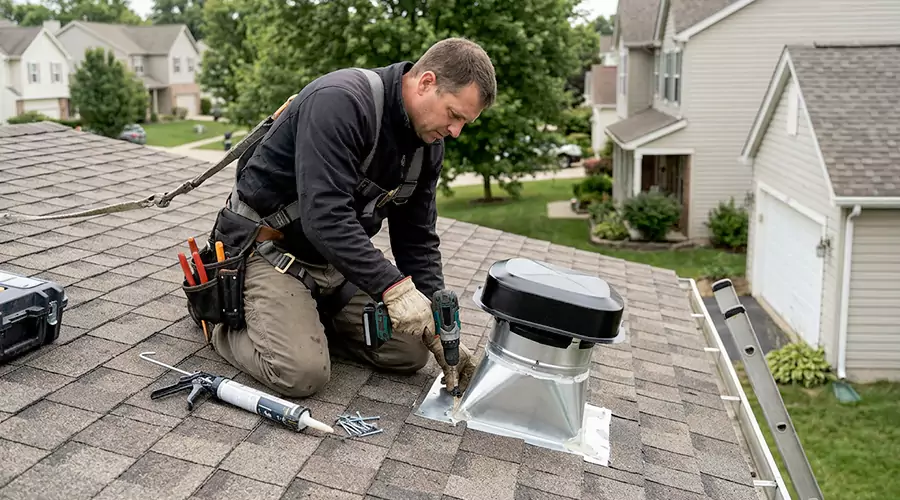
Yes, you can vent a clothes dryer through the roof when the exhaust system is properly designed, uses an approved dryer roof termination, and complies with the dryer manufacturer's instructions and local building codes. However, venting through an exterior wall is generally preferable when a suitable route is available because roof installations can be more difficult to clean, inspect, and maintain.
A conventional clothes dryer removes moisture from laundry by sending warm, humid air through an exhaust duct. This air must leave the building through a properly designed outdoor termination. Depending on the laundry room's location, the exhaust may exit through an exterior wall or roof. AC vent repair can help address damaged or restricted air-conditioning vents to support proper airflow and reliable HVAC system performance.
Roof venting is sometimes necessary in multistory houses, interior laundry rooms, and buildings where a direct exterior-wall connection is impractical. Although it is possible, the installation requires careful attention to duct length, airflow resistance, roof flashing, and future maintenance. Understanding the requirements helps homeowners decide whether a roof dryer vent is appropriate for their property.
Is It Legal to Vent a Dryer Through the Roof?
Yes. The 2024 International Residential Code (IRC) permits dryer exhaust systems that terminate outdoors, provided the installation meets applicable requirements. The code requires dryer exhaust to remain independent of other ventilation systems and discharge outside the building. It does not prohibit a properly designed roof termination.
However, a dryer cannot exhaust directly into an attic, roof cavity, soffit, or ridge vent. The roof termination must include an appropriate backdraft damper and cannot contain a lint-trapping screen. Manufacturer instructions and locally adopted codes determine the specific installation requirements.
When Is a Roof Dryer Vent Necessary?
Roof venting may be considered when the laundry room is located far from an exterior wall or when the building layout makes horizontal routing impractical.
Common situations include:
- Laundry rooms near the center of a house.
- Upper-floor laundry closets without a suitable exterior-wall route.
- Multistory buildings with dedicated vertical exhaust passages.
- Renovations where existing construction limits alternative routes.
- Properties with a properly designed existing roof exhaust system.
A contractor should evaluate other options before selecting a roof termination. A shorter exterior-wall route may provide easier maintenance and fewer airflow restrictions.
What Are the Advantages and Disadvantages of Roof Dryer Venting?
| Advantages | Disadvantages |
|---|---|
| Provides outdoor exhaust for interior laundry areas | Roof access makes cleaning more difficult |
| Can work with dedicated vertical duct routes | Longer routes may reduce airflow |
| Avoids some exterior-wall modifications | Roof penetration introduces leak risks |
| May suit certain multistory layouts | Specialized roof caps are necessary |
| Can use existing approved exhaust chases | Snow, debris, and damaged dampers can cause restrictions |
Roof venting can work reliably when installed correctly. However, its maintenance and weatherproofing requirements should be considered before construction begins.
What Type of Roof Vent Is Required for a Dryer?
A dryer needs a roof termination specifically designed and approved for dryer exhaust. Ordinary attic ventilation caps and bathroom fan roof vents should not automatically be used.
The termination must allow sufficient airflow and include a backdraft damper. The 2024 IRC prohibits screens at dryer exhaust terminations because lint can collect on them. Professional air duct cleaning service can help remove accumulated dust and debris from HVAC ductwork, supporting cleaner airflow and more efficient system operation.
The code also specifies a minimum unobstructed outlet area of 12.5 square inches. Choose a product compatible with the dryer exhaust duct and suitable for the roof's material, slope, and weather conditions.
What Materials Are Used for Roof Dryer Venting?
The permanent exhaust duct should normally be constructed from smooth-wall metal.
| Material | Purpose |
|---|---|
| Four-inch rigid metal duct | Carries dryer exhaust through the building |
| Approved metal elbows | Changes duct direction |
| Dryer-rated roof termination | Releases exhaust outdoors |
| Backdraft damper | Reduces reverse airflow |
| Suitable roof flashing | Protects the roof penetration |
| Approved joint-sealing materials | Seals duct connections |
| Proper duct supports | Keeps the exhaust passage secure |
| Listed metal transition duct | Connects the dryer to permanent ductwork |
Plastic vent hoses and ordinary flexible HVAC ducts are unsuitable for permanent dryer exhaust installations. The 2024 IRC generally requires smooth metal exhaust ducts with a nominal diameter of four inches and a minimum wall thickness of 0.0157 inch.
How to Install a Dryer Vent Through the Roof?
Roof penetrations and elevated work should be performed by qualified professionals. The following steps explain the general installation process.
Step 1. Inspect the Existing Building
Identify the laundry room location and the proposed route through the attic or other construction spaces. Check for framing, electrical wiring, plumbing, and existing ventilation components.
Step 2. Review the Dryer Manual
Confirm the required exhaust diameter, maximum permitted length, and acceptable termination arrangements. The dryer manufacturer's requirements should guide the design.
Step 3. Calculate the Exhaust Length
Measure the planned duct route and account for elbows using the applicable equivalent-length values. Under the 2024 IRC's standard method, the permanent exhaust duct is limited to 35 feet before fitting deductions. Approved manufacturer-based alternatives may allow different lengths.
Step 4. Choose the Roof Termination Location
Select a location that avoids structural conflicts and meets required clearances from building openings and air intakes. The roof cap should also be accessible for future professional maintenance.
Step 5. Prepare the Roof Penetration
A qualified installer creates the opening without damaging roof framing. Suitable flashing and weatherproofing details are necessary to prevent water from entering the roof assembly.
Step 6. Install the Metal Exhaust Duct
Route the rigid metal duct through the approved passage. Support it properly and avoid unnecessary elbows, damaged sections, and restrictive connections.
Step 7. Install the Dryer Roof Cap
Attach the approved termination according to its manufacturer instructions. Confirm that the backdraft damper operates freely and that no screen restricts the opening.
Step 8. Connect the Dryer
Use a suitable UL 2158A-listed transition duct between the appliance and permanent exhaust passage. The transition must remain accessible and should not become crushed behind the dryer.
Step 9. Inspect and Test the System
Verify that the exhaust reaches the outdoors and that all connections remain secure. A professional should evaluate airflow and check for leaks, obstructions, or problems with the roof termination.
How Long Can a Dryer Vent Run Through the Roof?
The permitted length depends on the appliance manufacturer's instructions and the applicable mechanical code. Under the standard 2024 IRC method, the permanent exhaust duct cannot exceed 35 feet before accounting for elbow resistance.
A typical four-inch-radius mitered 90-degree elbow reduces the allowable straight length by five feet. A comparable mitered 45-degree elbow reduces it by 2.5 feet. Long vertical routes should be evaluated carefully because additional resistance can affect dryer performance.
What Problems Can Roof Dryer Vents Cause?
The most common concerns involve restricted airflow, difficult cleaning access, and water intrusion. Lint can collect near bends or inside the roof termination. A stuck damper or accumulated outdoor debris may further restrict exhaust airflow.
Poor flashing can allow rainwater to enter the roof assembly. Cold weather may also contribute to condensation or frost problems under certain conditions. These issues are not inevitable, but they make professional installation and maintenance especially important.
How Often Should a Roof Dryer Vent Be Cleaned?
The U.S. Fire Administration recommends annual dryer exhaust duct cleaning. Roof-terminated systems may need closer monitoring because the exterior opening is more difficult to inspect. Longer drying times, unusual heat, and restricted-airflow warnings can indicate a developing blockage.
Avoid climbing onto the roof to perform cleaning without appropriate training and safety equipment. Professional cleaners can evaluate the complete exhaust route and roof cap.
Is Roof Venting Better Than Wall Venting?
Wall venting is generally the preferred option when it provides a shorter, more accessible exhaust route. An exterior-wall termination is often easier to inspect and clean. It also avoids creating a new roof penetration.
Roof venting remains a practical alternative when the building cannot accommodate a suitable wall connection. The best choice depends on the complete duct route rather than the termination location alone.
Conclusion
Dryers can vent through the roof when the exhaust system uses approved materials, an appropriate roof cap, and a properly designed duct route. The installation must discharge outdoors and meet manufacturer and local code requirements. Because roof terminations introduce maintenance and weatherproofing challenges, an exterior-wall route is generally preferable when practical. Professional installation and annual cleaning help keep roof dryer exhaust systems operating safely.